Economic Rationalism in Canberra
Throughout the world since the 1970s, state and public sector reform has been driven by a conservative agenda emphasising notions of 'streamlining' and 'rationalisation'; Australia has been no exception. Michael Pusey undertakes a detailed analysis of top bureaucrats in Canberra who have been responsible for this recasting of national policy. He concludes that economist rationalist view dominate each of the key ministries, and have altered the traditional balance between the economy, the state and society. The book also discusses the social significance of economic rationalisation and public sector reform from a theoretical perspective, contributing to contemporary understanding of modernisation, public morality and citizenship in the new global order.
Product Information
Product Information
Shipping & Returns
Shipping & Returns
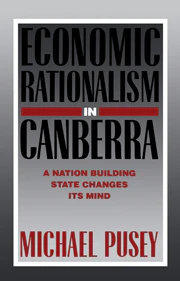
Economic Rationalism in Canberra
Economic Rationalism in Canberra
Throughout the world since the 1970s, state and public sector reform has been driven by a conservative agenda emphasising notions of 'streamlining' and 'rationalisation'; Australia has been no exception. Michael Pusey undertakes a detailed analysis of top bureaucrats in Canberra who have been responsible for this recasting of national policy. He concludes that economist rationalist view dominate each of the key ministries, and have altered the traditional balance between the economy, the state and society. The book also discusses the social significance of economic rationalisation and public sector reform from a theoretical perspective, contributing to contemporary understanding of modernisation, public morality and citizenship in the new global order.
Original: $91.76
-70%$91.76
$27.53Product Information
Product Information
Shipping & Returns
Shipping & Returns
Description
Throughout the world since the 1970s, state and public sector reform has been driven by a conservative agenda emphasising notions of 'streamlining' and 'rationalisation'; Australia has been no exception. Michael Pusey undertakes a detailed analysis of top bureaucrats in Canberra who have been responsible for this recasting of national policy. He concludes that economist rationalist view dominate each of the key ministries, and have altered the traditional balance between the economy, the state and society. The book also discusses the social significance of economic rationalisation and public sector reform from a theoretical perspective, contributing to contemporary understanding of modernisation, public morality and citizenship in the new global order.