Palestinian Peasants and Ottoman Officials
In a unique study of rural administration in the Ottoman Empire, Amy Singer explores the relationship between Palestinian peasants and Ottoman provincial officials around Jerusalem in the mid-sixteenth century. With the use of court records, the author provides a detailed account of local conditions of production, the mechanisms for assessing and collecting taxes, and the strategies that were evolved in evading them. The book emphasises the complex, colourful and interactive nature of Ottoman provincial administration, which, while obliged to extract revenues from the peasants and impress them with the power of imperial authority, was nevertheless profoundly influenced by local conditions and traditional practices in its dealings with the populace.
Product Information
Product Information
Shipping & Returns
Shipping & Returns
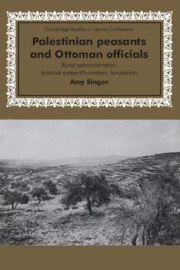
Palestinian Peasants and Ottoman Officials
Palestinian Peasants and Ottoman Officials
In a unique study of rural administration in the Ottoman Empire, Amy Singer explores the relationship between Palestinian peasants and Ottoman provincial officials around Jerusalem in the mid-sixteenth century. With the use of court records, the author provides a detailed account of local conditions of production, the mechanisms for assessing and collecting taxes, and the strategies that were evolved in evading them. The book emphasises the complex, colourful and interactive nature of Ottoman provincial administration, which, while obliged to extract revenues from the peasants and impress them with the power of imperial authority, was nevertheless profoundly influenced by local conditions and traditional practices in its dealings with the populace.
Original: $61.16
-70%$61.16
$18.35Product Information
Product Information
Shipping & Returns
Shipping & Returns
Description
In a unique study of rural administration in the Ottoman Empire, Amy Singer explores the relationship between Palestinian peasants and Ottoman provincial officials around Jerusalem in the mid-sixteenth century. With the use of court records, the author provides a detailed account of local conditions of production, the mechanisms for assessing and collecting taxes, and the strategies that were evolved in evading them. The book emphasises the complex, colourful and interactive nature of Ottoman provincial administration, which, while obliged to extract revenues from the peasants and impress them with the power of imperial authority, was nevertheless profoundly influenced by local conditions and traditional practices in its dealings with the populace.